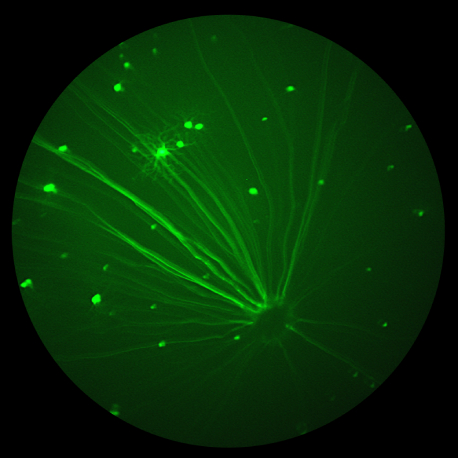
Mouse Models of Choroidal Neovascularization in the MICRON Literature
About the MICRON Research Literature
These research pages organize published studies using MICRON imaging systems by animal species and the disease or condition investigated.
All publication counts and figures reflect the complete indexed research collection.
Explore related studies through the MICRON Research Hubs or search the complete publication collection in the reSEARCH portal.
Understanding Choroidal Neovascularization
Choroidal neovascularization is the growth of new vessels out of the choroidal circulation, through or across Bruch's membrane, into the plane beneath the retinal pigment epithelium or beneath the neurosensory retina. It is an endpoint that several distinct eye diseases arrive at rather than a diagnosis in its own right, and some lesions are idiopathic.
Features of a neovascular lesion include:
- Vessels that are often immature and permeable
- Exudative lesions that may produce subretinal or sub-RPE fluid, lipid or blood, and can organize over time into fibrovascular scar
- Non-exudative complexes, with flow detectable before or without clinically evident leakage or fluid
What makes it sight-threatening in people is where it sits, because a lesion at or near the macula takes central vision while an eccentric one may spare it.
Choroidal Neovascularization in Experimental Research
What an animal model of choroidal neovascularization supplies is that lesion in a living eye, open to repeated angiographic and cross-sectional imaging, to measurement of lesion area and, where present, leakage or exudation, and to a test of whether an intervention prevents, limits or reverses it.
Two limits apply to translation:
- Mouse, rat and rabbit retinas have no macula, so an animal model in these species reproduces the neovascular lesion and its response to treatment rather than the macular anatomy that gives the human lesion its consequence. Endpoints resting on that anatomy, such as distortion and loss of reading vision, lack a counterpart in these animals.
- In a person the vessels grow through Bruch's membrane and pigment epithelium already altered by whatever preceded them, so a preparation that begins at the neovascular event supplies the lesion without the condition that permitted it, and does not by itself establish which of the diseases ending in choroidal neovascularization is being modeled.
Mouse Models of Choroidal Neovascularization
The mouse carries most of this work. Transgenic and knockout lines allow a pathway to be removed or overexpressed, and cost, availability, short generation time and a large body of background data reinforce the choice.
A genetic manipulation constrains rather than isolates a mechanism: developmental compensation and pleiotropy remain possible.
Published MICRON Research: Choroidal Neovascularization in Mice
This page lists 198 papers from the MICRON literature, published 2013 to 2026, that study choroidal neovascularization in mice.
Of these publications:
- 197 studies used mice as the primary choroidal neovascularization disease model.
- 1 study used healthy animals to assess pharmacokinetics, drug delivery, or tolerability.
In 186 of the 198 papers, choroidal neovascularization was induced in the mice by laser.
Scope of the literature collection: Publication counts reflect studies identified and indexed in the MICRON research corpus. This collection is not intended to represent an exhaustive review of all published choroidal neovascularization research.
Which imaging and experimental techniques are used in these studies?
| Technique | Papers |
|---|---|
| Laser Photocoagulation Models | 145 |
| Fundus Fluorescein Angiography | 134 |
| Intravitreal Injection / Delivery | 121 |
| Optical Coherence Tomography | 101 |
| Topical Ophthalmic Drug Delivery | 52 |
| Electroretinography | 43 |
| AAV-Mediated Ocular Gene Delivery | 15 |
| CRISPR-Based Ocular Gene Editing | 1 |
| Ocular Implants / Sustained Release | 1 |
| Optogenetics (Vision Restoration) | 1 |
| Optokinetic / Optomotor Response | 1 |
Technique counts are paper-level co-occurrences and do not necessarily indicate that a technique was applied to the focal species or focal disease model.
Capabilities and Limitations of Imaging Techniques
A summary of what each imaging technique listed above can measure, the information it provides, and its limitations in research applications. The others appear in the table and not here: Optogenetics (Vision Restoration).
Laser Photocoagulation Models
A laser lesion provokes a reproducible, quantifiable injury at a known time and place. Wavelength, power, duration, spot size, pulse mode, focus and lesion location together determine the injury produced, allowing laser exposure to be configured for different experimental endpoints. It is an induced injury, not the disease: it produces a lesion directly, bypassing the process that gives rise to comparable damage in patients.
Fundus Fluorescein Angiography
Fundus fluorescein angiography uses an injected fluorescent dye to visualize blood flow through the retinal and choroidal circulation. Sequential images show how vessels fill, identify areas of reduced or absent perfusion, and reveal dye leakage associated with vascular abnormalities.
This technique is particularly useful for evaluating vascular perfusion, blood-retinal barrier integrity, and abnormal vessel growth. Fluorescein angiography primarily shows dye distribution rather than the surrounding retinal tissue. It provides a two-dimensional (en face) view in which vessels at different depths may overlap. Cross-sectional and cellular structural details require other imaging methods, such as optical coherence tomography (OCT) or optical coherence tomography angiography (OCT-A). Vascular abnormalities that do not affect dye filling or produce leakage may also remain undetected.
Intravitreal Injection / Delivery
Injection into the vitreous places a substance directly into the vitreous at a known administered dose and chosen time, reducing but not eliminating systemic exposure. The injectate may be a therapeutic compound, cell preparation or viral vector, or an agent used to create the model, such as a toxin, vasoactive or excitotoxic compound, or infectious inoculum. The route bypasses surface-delivery barriers and provides direct access to the vitreous and posterior segment, but the concentration reached in a particular ocular tissue depends on distribution and clearance and is not fixed by the injected dose alone. It is invasive and discrete: each repeat dose or challenge requires another injection, and vehicle- or sham-injected controls can help separate effects of the injectate from effects of the procedure.
Optical Coherence Tomography
Optical coherence tomography provides high-resolution, cross-sectional images of ocular tissues in the living eye, allowing researchers to visualize structures at different depths. OCT is particularly useful for measuring tissue thickness, identifying structural abnormalities, and assessing the location and extent of tissue changes.
As a non-invasive imaging technique, OCT enables repeated measurements in the same eye over time, supporting longitudinal studies of disease progression and treatment response. Although OCT provides detailed structural information, it does not directly measure cellular activity or visual function. Tissue that appears structurally normal may still have functional abnormalities, making OCT a valuable companion to functional assessments such as electroretinography (ERG).
Topical Ophthalmic Drug Delivery
A compound applied as drops to the ocular surface. It is non-invasive and repeatable, so it supports frequent dosing without a procedure for each dose. What the route has to establish depends on the target: for an ocular-surface target, residence time and penetration into the surface tissue are the main barriers; for an intraocular anterior-segment target, the compound must cross ocular-surface and corneal or conjunctival barriers and reach an intraocular concentration sufficient for the experiment; for a posterior-segment target, additional ocular barriers separate the surface from the target and posterior-segment exposure is harder to establish.
Electroretinography
Records the retina's electrical response to light, giving component-sensitive information about outer- and inner-retinal function. It measures function directly, which no structural method does. Full-field ERG sums across the whole retina, so a small lesion can leave the trace unchanged; focal and multifocal variants trade signal amplitude for spatial resolution.
AAV-Mediated Ocular Gene Delivery
An adeno-associated viral vector delivers genetic material to ocular cells, and a single administration can support long-lived transgene expression. That persistence is useful for gene augmentation and sustained therapeutic-protein expression; AAV can also deliver gene-silencing or genome-editing cargo, where long-lived expression of the editing machinery may be unnecessary or undesirable. Capsid and route of delivery jointly determine which cells are reached, so different delivery routes and vector designs give different distributions.
CRISPR-Based Ocular Gene Editing
Uses a programmable genome-editing system to alter DNA at an endogenous locus rather than adding a separate replacement copy. Depending on the editor and design, it can disrupt, correct or install a sequence, either therapeutically or to create an experimental model. Once a genomic sequence change is established, the edit itself cannot be withdrawn like a dose; where the edit is present from conception, the resulting phenotype also reflects its effects throughout development. Off-target sequence changes are a separate question that structural imaging does not establish.
Ocular Implants / Sustained Release
A sustained-release system holds a compound in or on the eye and lets it out gradually, so exposure is maintained from one placement rather than from a series of doses. The class spans polymer and non-polymer solid depots, injectable and particulate carriers, and reservoir devices; the release period belongs to the platform and not to the route, and runs from days to years. What the approach is for is to separate the dosing interval from the procedure interval, holding exposure at the target for as long as the question runs, whether that is the few weeks of a short-lived model or the span of a lifelong disease, without an intervention for each dose. What it gives up is control after placement. The release profile has to be measured rather than assumed, altering or ending delivery may require a further procedure, biodegradable systems behave differently from removable ones, and the carrier sits in contact with ocular tissue, so how the eye tolerates it is part of the result and not a precondition of it.
Optokinetic / Optomotor Response
Measures a reflexive head or eye movement tracking a moving pattern, giving a rapid, training-free behavioral estimate of spatial vision and contrast sensitivity in an animal that cannot report them. It is driven largely by reflex circuitry and reports on the visual pathway as a whole, so a deficit it detects still has to be localized by a structural or electrophysiological method, or separated from cortical processing by an operant task.
Which MICRON systems and add-ons appear?
| Instrument | Papers |
|---|---|
| MICRON IV | 131 |
| Image-Guided Laser | 106 |
| MICRON III | 62 |
| Image-Guided OCT | 54 |
| Image-Guided Focal ERG | 6 |
| Insight Software | 6 |
| MICRON (Unspecified) | 6 |
| Ganzfeld ERG System | 4 |
| MICRON 5 | 3 |
| Anterior Segment Imaging System | 2 |
| MICRON II | 1 |
Which strains and genetic lines are used?
| Strain | Papers | Reported as |
|---|---|---|
| C57BL/6J | 135 | C57/Bl6J, C57B/6J, C57BL/6 J, C57BL/J6, C57BL6/J, C57Bl/6 J, C57Bl6/J |
| C57BL/6 | 44 | C57/BL/6, C57BL6, C57Bl/6 |
| JR5558 | 2 | |
| BALB/c | 1 | |
| C57BL/6 (JR5558) | 1 | |
| C57BL/6JRj | 1 | |
| C57BL/6Jmsslc | 1 | |
| C57BL/6N | 1 | |
| C57Bl/6 x CBA crossed with CD1 | 1 | |
| C57Bl6JARC | 1 |
Which other species appear alongside?
| Species | Papers |
|---|---|
| Rabbit | 8 |
| Rat | 8 |
| Swine / Domestic Pig | 5 |
| Cynomolgus Macaque | 3 |
| Rhesus Macaque | 2 |
| Zebrafish | 2 |
| Macaque (Unspecified) | 1 |
| Minipig | 1 |
What other conditions are recorded on the same papers?
| Disease | Papers |
|---|---|
| Age-Related Macular Degeneration (Wet/Neovascular) | 167 |
| Age-Related Macular Degeneration (General) | 154 |
| Retinal Neovascularization (General) | 35 |
| Retinal Pigment Epithelium Dysfunction | 20 |
| Age-Related Macular Degeneration (Dry/Atrophic) | 17 |
| Retinopathy of Prematurity | 17 |
| Diabetic Retinopathy | 15 |
| Retinal Degeneration (General) | 10 |
| Retinal Detachment | 4 |
| Retinal Vein Occlusion (RVO) | 4 |
| Corneal Neovascularization | 3 |
| Diabetes Mellitus, Type 1 | 3 |
| Light-Induced Retinal Degeneration | 3 |
| Corneal Wound Healing | 2 |
| Retinal Drusen | 2 |
| Cataract (General) | 1 |
| Cone Dystrophy / Cone-Rod Dystrophy | 1 |
| Corneal Opacity / Scarring | 1 |
| Epiretinal Membrane | 1 |
| Glaucoma (General) | 1 |
| Stroke / Cerebral Small Vessel Disease | 1 |
| Sympathetic Ophthalmia | 1 |
Which MICRON configurations appear in this work?
Configurations recorded in these papers, and the techniques recorded alongside them.
| MICRON configuration | Papers | Most frequent techniques recorded alongside |
|---|---|---|
| MICRON IV | 131 | Laser Photocoagulation Models (100), Fundus Fluorescein Angiography (91), Intravitreal Injection / Delivery (85) |
| Image-Guided Laser | 106 | Laser Photocoagulation Models (83), Fundus Fluorescein Angiography (74), Intravitreal Injection / Delivery (69) |
| MICRON III | 62 | Laser Photocoagulation Models (43), Fundus Fluorescein Angiography (42), Optical Coherence Tomography (35) |
| Image-Guided OCT | 54 | Optical Coherence Tomography (52), Fundus Fluorescein Angiography (40), Laser Photocoagulation Models (39) |
| Image-Guided Focal ERG | 6 | Electroretinography (6), Intravitreal Injection / Delivery (5), Optical Coherence Tomography (5) |
| Insight Software | 6 | Fundus Fluorescein Angiography (6), Laser Photocoagulation Models (6), Optical Coherence Tomography (6) |
| MICRON (Unspecified) | 6 | Laser Photocoagulation Models (4), Intravitreal Injection / Delivery (4), Optical Coherence Tomography (2) |
| Ganzfeld ERG System | 4 | Electroretinography (4), Fundus Fluorescein Angiography (4), Laser Photocoagulation Models (4) |
| MICRON 5 | 3 | Laser Photocoagulation Models (3), Fundus Fluorescein Angiography (2), Intravitreal Injection / Delivery (2) |
| Anterior Segment Imaging System | 2 | Topical Ophthalmic Drug Delivery (2), Fundus Fluorescein Angiography (1), Intravitreal Injection / Delivery (1) |
| MICRON II | 1 | AAV-Mediated Ocular Gene Delivery (1), Fundus Fluorescein Angiography (1), Optical Coherence Tomography (1) |
The papers
| Year | Title | Journal | Role of focal species | MICRON products | Links |
|---|---|---|---|---|---|
| 2026 | Mononuclear phagocyte–specific cGAS/STING targeting suppresses experimental choroidal neovascularization | JCI Insight | Disease model | Image-Guided Laser, MICRON III | DOI · reSEARCH |
| 2026 | FRZB-induced anti-angiogenic effect via Caveolin-1-mediated TGFβ signalling. | Nature Communications | Disease model | Image-Guided Laser, MICRON IV | DOI · reSEARCH |
| 2026 | Endothelial TGFβ signaling modulates choroidal neovascularization severity via myeloid–endothelial cell interaction | Frontiers in Immunology | Disease model | MICRON IV | DOI · reSEARCH |
| 2026 | Tetrahedral DNA nano-PROTACs enable enhanced ocular penetration and efficient nucleolin degradation for choroidal neovascularization therapy | Signal Transduction and Targeted Therapy | Disease model | Image-Guided OCT, MICRON IV | DOI · reSEARCH |
| 2026 | Engineered RPE Cell Therapy for Controllable Anti-VEGF Delivery in Neovascular AMD | Research Square | Disease model | Image-Guided Laser, Image-Guided OCT, Insight Software, MICRON III | DOI · reSEARCH |
| 2026 | RAGE Inhibition by TTP488 Suppresses Macrophage-Associated Inflammation and Enhances Anti-VEGF Efficacy in Experimental Choroidal Neovascularization | Research Square | Disease model | Image-Guided Laser, MICRON IV | DOI · reSEARCH |
| 2026 | Intraocular delivery of crystalline sorafenib provides sustained, potent inhibition of wet age-related macular degeneration. | Journal of Controlled Release | Disease model | Image-Guided Laser, MICRON III | DOI · reSEARCH |
| 2026 | Development and characterization of a topical ferrochelatase inhibitor nanoemulsion for choroidal neovascularization therapy. | International Journal of Pharmaceutics: X | Disease model | Anterior Segment Imaging System, Image-Guided Laser, Image-Guided OCT, MICRON 5 | DOI · reSEARCH |
| 2026 | Circulating natural killer cells are phenotypically and functionally altered in age-related macular degeneration. | Cell Reports. Medicine | Disease model | Image-Guided Laser, MICRON IV | DOI · reSEARCH |
| 2026 | Histology correlated adaptive optics polarisation sensitive optical coherence tomography. | Biomedical Optics Express | Disease model | Image-Guided Laser, MICRON 5 | DOI · reSEARCH |
| 2026 | RPE With ROCK-Mediated Epithelial-Mesenchymal Transition as a Key Contributor of Subretinal Fibrosis in AMD. | Investigative Ophthalmology & Visual Science | Disease model | Image-Guided Focal ERG, MICRON III | DOI · reSEARCH |
| 2026 | TNFAIP3 in M2 Macrophage Attenuates Subretinal Fibrosis in Laser-Induced Murine Model. | Investigative Ophthalmology & Visual Science | Disease model | Image-Guided OCT, MICRON IV | DOI · reSEARCH |
| 2026 | Eye Drop Development of Anti-VEGF Therapeutics by Ocular Penetrating Carrier to the Posterior Region of the Eye. | Translational Vision Science & Technology | Disease model | Image-Guided Laser, Image-Guided OCT, Insight Software, MICRON IV | DOI · reSEARCH |
| 2026 | Efficacy of anti-VEGF single-chain variable fragment AAV-based gene therapy in a laser-induced choroidal neovascularisation mouse model. | Molecular Therapy. Advances | Disease model | Image-Guided Focal ERG, Image-Guided Laser, MICRON III | DOI · reSEARCH |
| 2026 | Computational aberration-corrected volumetric imaging of single retinal cells in the living eye | bioRxiv | Healthy PK, delivery or tolerability | Image-Guided Laser, MICRON III | DOI · reSEARCH |
| 2026 | Inhibition of Pathological Mitochondrial Fission in Retinal Pigment Epithelium Mitigates Choroidal Neovascularization. | Investigative Ophthalmology & Visual Science | Disease model | MICRON IV | DOI · reSEARCH |
| 2026 | The transaminase-ω-amidase pathway senses oxidative stress to control glutamine metabolism and α-ketoglutarate levels in endothelial cells. | The EMBO Journal | Disease model | Image-Guided Laser, MICRON IV | DOI · reSEARCH |
| 2026 | Ethyl ferulate suppresses choroidal neovascularization by accelerating Keap1 degradation through the inhibition of PSMD14-mediated deubiquitination. | Phytomedicine | Disease model | Image-Guided Laser, Image-Guided OCT, MICRON IV | DOI · reSEARCH |
| 2026 | Extraocular delivery of bioswitchable tri-miR-22-loaded tetrahedral DNA nanostructures for intraocular neovascular and neurodegenerative repair. | Signal Transduction and Targeted Therapy | Disease model | Image-Guided Laser, Image-Guided OCT, MICRON IV | DOI · reSEARCH |
| 2026 | AAV-mediated multiple gene therapy combining VEGFA-targeting miR-agshRNAs and PEDF for the suppression of choroidal neovascularization. | Molecular Therapy. Nucleic Acids | Disease model | Image-Guided Laser, Image-Guided OCT, MICRON IV | DOI · reSEARCH |
| 2025 | Dysregulated Proline Metabolism Contributes to Subretinal Fibrosis in Neovascular AMD: Therapeutic Potential of Prolyl-4-Hydroxylase Inhibition | bioRxiv | Disease model | Image-Guided OCT, MICRON IV | DOI · reSEARCH |
| 2025 | circSIRT2/miR-542-3p/VASH1 axis regulates endothelial-to-mesenchymal transition (EndMT) in subretinal fibrosis in age-related macular degeneration models. | Aging Cell | Disease model | Image-Guided OCT, MICRON (Unspecified) | DOI · reSEARCH |
| 2025 | Smoking aggravates neovascular age-related macular degeneration via Sema4D-PlexinB1 axis-mediated activation of pericytes. | Nature Communications | Disease model | Image-Guided OCT, MICRON IV | DOI · reSEARCH |
| 2025 | Endothelial IL-36 receptor activation promotes vascular stability to limit pathological microvessel permeability in the CNS. | Cell Reports | Disease model | MICRON (Unspecified) | DOI · reSEARCH |
| 2025 | PRRX1 Orchestrates Pericyte-Myofibroblast Transition in Pathological Retinal Fibrosis. | Investigative Ophthalmology & Visual Science | Disease model | Image-Guided Laser, MICRON (Unspecified) | DOI · reSEARCH |
| 2025 | Oridonin Preserves Retinal Pigmented Epithelial Cell Tight Junctions and Ameliorates Choroidal Neovascularization. | Investigative Ophthalmology & Visual Science | Disease model | MICRON IV | DOI · reSEARCH |
| 2025 | Targeted siRNA Delivery Against RUNX1 Via tFNA: Inhibiting Retinal Neovascularization and Restoring Vessels Through Dll4/Notch1 Signaling. | Investigative Ophthalmology & Visual Science | Disease model | Image-Guided OCT, MICRON IV | DOI · reSEARCH |
| 2025 | HTRA1-dependent proteolysis induces age-related retinal degeneration and exacerbates choroidal neovascularization. | Disease Models & Mechanisms | Disease model | Image-Guided Laser, MICRON III | DOI · reSEARCH |
| 2025 | VEGF in Tears as a Biomarker for Exudative Age-Related Macular Degeneration: Molecular Dynamics in a Mouse Model and Human Samples. | International Journal of Molecular Sciences | Disease model | Image-Guided Laser, MICRON IV | DOI · reSEARCH |
| 2025 | Phlorizin Protects Against Oxidative Stress and Inflammation in Age-Related Macular Degeneration Model. | Biomolecules | Disease model | MICRON IV | DOI · reSEARCH |
| 2025 | TREM2-Mediated Myeloid Cells Protect Against Pathological Choroidal Neovascularization. | FASEB Journal | Disease model | Image-Guided Laser, MICRON IV | DOI · reSEARCH |
| 2025 | Occludin acts as a dynein adaptor regulating permeability and collateral angiogenesis. | Proceedings of the National Academy of Sciences of the United States of America | Disease model | Image-Guided Laser, MICRON III | DOI · reSEARCH |
| 2025 | ROS-responsive drug delivery system with enhanced anti-angiogenic and anti-inflammatory properties for neovascular age-related macular degeneration therapy. | Materials Today. Bio | Disease model | Image-Guided Laser, MICRON IV | DOI · reSEARCH |
| 2025 | Differential Roles of Macrophages and Microglia in Subretinal Fibrosis Secondary to Neovascular Age-Related Macular Degeneration. | Investigative Ophthalmology & Visual Science | Disease model | MICRON IV | DOI · reSEARCH |
| 2025 | Nintedanib Induces Mesenchymal-to-Epithelial Transition and Reduces Subretinal Fibrosis Through Metabolic Reprogramming. | International Journal of Molecular Sciences | Disease model | MICRON IV | DOI · reSEARCH |
| 2025 | Pharmacological blocking of microfibrillar-associated protein 4 reduces retinal neoangiogenesis and vascular leakage. | Molecular Therapy | Disease model | Image-Guided Laser, MICRON IV | DOI · reSEARCH |
| 2025 | OBM1701 Alleviates Choroidal Neovascularization in Experimental Animals Via Suppressing the Expression of HIF-1α in Retinal Pigment Epithelial Cells. | Translational Vision Science & Technology | Disease model | MICRON III | DOI · reSEARCH |
| 2025 | Non-invasive bioelectrical therapy suppresses retinal neovascularization by modulating cellular metabolism and inflammation. | Cell Communication and Signaling | Disease model | Image-Guided Laser, MICRON IV | DOI · reSEARCH |
| 2025 | Role of alpha-1 antitrypsin in Bruch's membrane integrity. | Scientific Reports | Disease model | MICRON IV | DOI · reSEARCH |
| 2025 | PRL3-zumab as an anti-angiogenic therapy in neovascular eye diseases. | Nature Communications | Disease model | Image-Guided Laser, Image-Guided OCT, MICRON IV | DOI · reSEARCH |
| 2025 | RAGE Is Essential for Subretinal Fibrosis in Laser-Induced Choroidal Neovascularization: Therapeutic Implications. | Investigative Ophthalmology & Visual Science | Disease model | Image-Guided Laser, Image-Guided OCT, MICRON IV | DOI · reSEARCH |
| 2025 | ApoM-bound S1P acts via endothelial S1PR1 to suppress choroidal neovascularization and vascular leakage. | Angiogenesis | Disease model | Image-Guided Laser, MICRON IV | DOI · reSEARCH |
| 2025 | C-reactive protein dissociation drives choroidal neovascularization in age-related macular degeneration. | Scientific Reports | Disease model | Image-Guided Laser, MICRON IV | DOI · reSEARCH |
| 2025 | Granzyme B contributes to subretinal fibrosis in neovascular age-related macular degeneration by modulating inflammation and epithelial-mesenchymal transition. | Journal of Neuroinflammation | Disease model | Image-Guided Laser, MICRON IV | DOI · reSEARCH |
| 2025 | One-Year Ultralong Intravitreal Release of Tyrosine Kinase Inhibitor from Supramolecular Temperature-Responsive Hydrogel. | Biomacromolecules | Disease model | Image-Guided Laser, MICRON IV | DOI · reSEARCH |
| 2025 | Nanobody-based gene therapy targeting complement component C3 reduces choroidal neovascularization in mice. | Molecular Therapy. Methods & Clinical Development | Disease model | Image-Guided Laser, Image-Guided OCT, MICRON III, MICRON IV | DOI · reSEARCH |
| 2025 | ZO-1/Tjp1 and ZO-2/Tjp2 deletion in retinal pigment epithelium causes progressive retinal degeneration. | iScience | Disease model | Image-Guided Laser, Image-Guided OCT, Insight Software, MICRON IV | DOI · reSEARCH |
| 2025 | Nkx3.2 Inhibits Retinal Degeneration by Modulating Inflammation and Cell Death in RPE. | Investigative Ophthalmology & Visual Science | Disease model | Ganzfeld ERG System, Image-Guided OCT, Insight Software, MICRON IV | DOI · reSEARCH |
| 2025 | Deficiency of 2-Oxoglutarate Carrier (Slc25a11) Drives RPE Epithelial-to-Mesenchymal Transition and Exacerbates Subretinal Fibrosis in Neovascular Age-Related Macular Degeneration. | Aging Cell | Disease model | Image-Guided Laser, Image-Guided OCT, MICRON IV | DOI · reSEARCH |
| 2025 | Pericyte Expression of VEGF-A Minimally Impacts Ocular Vascular Development and Neovascularization. | Cells | Disease model | MICRON III | DOI · reSEARCH |
| 2025 | Ref-1 is overexpressed in neovascular eye disease and targetable with a novel inhibitor. | Angiogenesis | Disease model | Image-Guided Laser, Image-Guided OCT, MICRON IV | DOI · reSEARCH |
| 2025 | AI Quantification of Vascular Lesions in Mouse Fundus Fluorescein Angiography. | Translational Vision Science & Technology | Disease model | Image-Guided Laser, MICRON IV | DOI · reSEARCH |
| 2025 | Restoring compromised blood-retina-barrier integrity with Netrin-1 overexpression. | Cellular and Molecular Life Sciences | Disease model | Image-Guided OCT, MICRON IV | DOI · reSEARCH |
| 2025 | Anti-Syndecan 2 Antibody Treatment Reduces Edema Formation and Inflammation of Murine Laser-Induced CNV. | Translational Vision Science & Technology | Disease model | Image-Guided Focal ERG, Image-Guided Laser, Image-Guided OCT, Insight Software, MICRON IV | DOI · reSEARCH |
| 2024 | Fas Ligand enhances vessel maturation and inhibits vascular leakage associated with age-related macular degeneration | Research Square | Disease model | Image-Guided Laser, MICRON III | DOI · reSEARCH |
| 2024 | Targeting cell-type-specific, choroid-peripheral immune signaling to treat age-related macular degeneration. | Cell Reports. Medicine | Disease model | Image-Guided Laser, MICRON (Unspecified) | DOI · reSEARCH |
| 2024 | Sphingosine-1-phosphate receptor 1/5 selective agonist alleviates ocular vascular pathologies. | Scientific Reports | Disease model | Image-Guided Laser, MICRON IV | DOI · reSEARCH |
| 2024 | Granzyme B degrades extracellular matrix and promotes inflammation and choroidal neovascularization. | Angiogenesis | Disease model | Ganzfeld ERG System, Image-Guided Laser, MICRON IV | DOI · reSEARCH |
| 2024 | Mast cells promote choroidal neovascularization in a model of age-related macular degeneration. | Journal of Neuroinflammation | Disease model | MICRON IV | DOI · reSEARCH |
| 2024 | SOCS3 regulates pathological retinal angiogenesis through modulating SPP1 expression in microglia and macrophages. | Molecular Therapy | Disease model | Image-Guided Laser, MICRON IV | DOI · reSEARCH |
| 2024 | Topical Ophthalmic Liposomes Dual-Modified with Penetratin and Hyaluronic Acid for the Noninvasive Treatment of Neovascular Age-Related Macular Degeneration. | International Journal of Nanomedicine | Disease model | MICRON IV | DOI · reSEARCH |
| 2024 | Receptor-Interacting Protein Kinase-3 Expression Impacts Ocular Vascular Development and Pathological Neovascularization. | Cells | Disease model | MICRON III | DOI · reSEARCH |
| 2024 | Long-Acting Microparticle Formulation of Griseofulvin for Ocular Neovascularization Therapy. | Small | Disease model | Image-Guided Laser, Image-Guided OCT, MICRON IV | DOI · reSEARCH |
| 2024 | A Multifunctional Nanodrug Co-Delivering VEGF-siRNA and Dexamethasone for Synergistic Therapy in Ocular Neovascular Diseases. | International Journal of Nanomedicine | Disease model | MICRON IV | DOI · reSEARCH |
| 2024 | Identification of the CDH18 gene associated with age-related macular degeneration using weighted gene co-expression network analysis. | Frontiers in Genetics | Disease model | Image-Guided Laser, MICRON IV | DOI · reSEARCH |
| 2024 | Preclinical evaluation of NG101, a potential AAV gene therapy for wet age-related macular degeneration. | Molecular Therapy. Methods & Clinical Development | Disease model | Image-Guided Laser, Image-Guided OCT, MICRON IV | DOI · reSEARCH |
| 2024 | Role of NLRP3 Inflammasomes in Monocyte and Microglial Recruitments in Choroidal Neovascularization. | ImmunoHorizons | Disease model | Image-Guided Laser, MICRON IV | DOI · reSEARCH |
| 2024 | Light-Activated Anti-Vascular Combination Therapy against Choroidal Neovascularization. | Advanced Science | Disease model | MICRON IV | DOI · reSEARCH |
| 2024 | Involvement of Lgals3/Galectin-3 in Choroidal Neovascularization and Subretinal Fibrosis Formation. | Biomedicines | Disease model | Image-Guided Laser, Image-Guided OCT, MICRON IV | DOI · reSEARCH |
| 2024 | Effects of Topic Delivery of an Inhibitor of Serine Racemase on Laser-Induced Choroidal Vasculopathy. | Translational Vision Science & Technology | Disease model | Image-Guided Laser, MICRON IV | DOI · reSEARCH |
| 2024 | H-151, a Selective STING Inhibitor, Has Potential as a Treatment for Neovascular Age-Related Macular Degeneration. | Investigative Ophthalmology & Visual Science | Disease model | MICRON IV | DOI · reSEARCH |
| 2024 | JR5558 mice are a reliable model to investigate subretinal fibrosis. | Scientific Reports | Disease model | Image-Guided OCT, MICRON IV | DOI · reSEARCH |
| 2024 | Therapeutic intervention in neuroinflammation for neovascular ocular diseases through targeting the cGAS-STING-necroptosis pathway. | Journal of Neuroinflammation | Disease model | MICRON IV | DOI · reSEARCH |
| 2024 | In vivo monitoring of active subretinal fibrosis in mice using collagen hybridizing peptides. | Lab Animal | Disease model | Image-Guided Laser, MICRON IV | DOI · reSEARCH |
| 2024 | PDK4-mediated metabolic reprogramming is a potential therapeutic target for neovascular age-related macular degeneration. | Cell Death & Disease | Disease model | MICRON IV | DOI · reSEARCH |
| 2024 | Optimal Humanized Scg3-Neutralizing Antibodies for Anti-Angiogenic Therapy of Diabetic Retinopathy. | International Journal of Molecular Sciences | Disease model | Image-Guided Laser, MICRON IV | DOI · reSEARCH |
| 2024 | Botulinum neurotoxin serotype A inhibited ocular angiogenesis through modulating glial activation via SOCS3. | Angiogenesis | Disease model | Image-Guided Laser, MICRON IV | DOI · reSEARCH |
| 2024 | Sema4D Knockout Attenuates Choroidal Neovascularization by Inhibiting M2 Macrophage Polarization Via Regulation of the RhoA/ROCK Pathway. | Investigative Ophthalmology & Visual Science | Disease model | Image-Guided OCT, MICRON IV | DOI · reSEARCH |
| 2024 | SB431542 partially inhibits high glucose-induced EMT by restoring mitochondrial homeostasis in RPE cells. | Cell Communication and Signaling | Disease model | MICRON (Unspecified) | DOI · reSEARCH |
| 2023 | METTL3-mediated m6A modification of HMGA2 mRNA promotes subretinal fibrosis and epithelial-mesenchymal transition. | Journal of Molecular Cell Biology | Disease model | Image-Guided OCT, MICRON (Unspecified) | DOI · reSEARCH |
| 2023 | Red Light-Triggered Anti-Angiogenic and Photodynamic Combination Therapy of Age-Related Macular Degeneration. | Advanced Science | Disease model | MICRON 5, MICRON IV | DOI · reSEARCH |
| 2023 | An intravitreal-injectable hydrogel depot doped borneol-decorated dual-drug-coloaded microemulsions for long-lasting retina delivery and synergistic therapy of wAMD. | Journal of Nanobiotechnology | Disease model | MICRON IV | DOI · reSEARCH |
| 2023 | Warburg Effect as a Novel Mechanism for Homocysteine-Induced Features of Age-Related Macular Degeneration. | International Journal of Molecular Sciences | Disease model | Image-Guided OCT, MICRON III | DOI · reSEARCH |
| 2023 | Fiji-Assisted Automatic Quantitative Volumetric Analysis of Choroidal Neovascularization in a Laser-Induced Choroidal Neovascularization Mouse Model. | Translational Vision Science & Technology | Disease model | Image-Guided Laser, MICRON IV | DOI · reSEARCH |
| 2023 | Regulatable Complement Inhibition of the Alternative Pathway Mitigates Wet Age-Related Macular Degeneration Pathology in a Mouse Model. | Translational Vision Science & Technology | Disease model | MICRON III | DOI · reSEARCH |
| 2023 | Exploring the Therapeutic Potential of Elastase Inhibition in Age-Related Macular Degeneration in Mouse and Human. | Cells | Disease model | Image-Guided Laser, MICRON III | DOI · reSEARCH |
| 2023 | PRMT5 is a therapeutic target in choroidal neovascularization. | Scientific Reports | Disease model | Image-Guided Laser, MICRON IV | DOI · reSEARCH |
| 2023 | ERp29 Attenuates Nicotine-Induced Endoplasmic Reticulum Stress and Inhibits Choroidal Neovascularization. | International Journal of Molecular Sciences | Disease model | MICRON IV | DOI · reSEARCH |
| 2023 | Integration of human stem cell-derived in vitro systems and mouse preclinical models identifies complex pathophysiologic mechanisms in retinal dystrophy. | Frontiers in Cell and Developmental Biology | Disease model | Image-Guided Laser, MICRON III | DOI · reSEARCH |
| 2023 | Anti-Scg3 Gene Therapy to Treat Choroidal Neovascularization in Mice. | Biomedicines | Disease model | Image-Guided Laser, MICRON IV | DOI · reSEARCH |
| 2023 | Matrix Metalloproteinase 13 Is Associated with Age-Related Choroidal Neovascularization. | Antioxidants | Disease model | Image-Guided Laser, MICRON IV | DOI · reSEARCH |
| 2023 | Antibody blockade of Jagged1 attenuates choroidal neovascularization. | Nature Communications | Disease model | Image-Guided Laser, MICRON IV | DOI · reSEARCH |
| 2023 | Therapeutic Benefit of Melatonin in Choroidal Neovascularization During Aging Through the Regulation of Senescent Macrophage/Microglia Polarization. | Investigative Ophthalmology & Visual Science | Disease model | Image-Guided OCT, MICRON IV | DOI · reSEARCH |
| 2023 | Protective role of IL-17-producing γδ T cells in a laser-induced choroidal neovascularization mouse model. | Journal of Neuroinflammation | Disease model | Image-Guided Laser, MICRON IV | DOI · reSEARCH |
| 2022 | Evaluation of sex differences in laser-induced choroidal neovascularization severity, phenotype and disease progression | bioRxiv | Disease model | MICRON IV | DOI · reSEARCH |
| 2022 | Melanin Nanoparticles as an Alternative to Natural Melanin in Retinal Pigment Epithelium Cells and Their Therapeutic Effects against Age-Related Macular Degeneration | bioRxiv | Disease model | Image-Guided Laser, MICRON III | DOI · reSEARCH |
| 2022 | Implication of N-Methyl-d-Aspartate Receptor in Homocysteine-Induced Age-Related Macular Degeneration | Prime Archives in Molecular Sciences | Disease model | Image-Guided Laser, Image-Guided OCT, Insight Software, MICRON III, MICRON IV | DOI · reSEARCH |
| 2022 | Comparative ligandomics implicates secretogranin III as a disease-restricted angiogenic factor in laser-induced choroidal neovascularization. | The FEBS Journal | Disease model | Image-Guided Laser, MICRON IV | DOI · reSEARCH |
| 2022 | Small-molecule inhibitors of ferrochelatase are antiangiogenic agents. | Cell Chemical Biology | Disease model | Image-Guided Laser, Image-Guided OCT, MICRON IV | DOI · reSEARCH |
| 2022 | An improved method for murine laser-induced choroidal neovascularization lesion quantification from optical coherence tomography images. | MethodsX | Disease model | Image-Guided OCT, MICRON IV | DOI · reSEARCH |
| 2022 | ANGPTL4 influences the therapeutic response of patients with neovascular age-related macular degeneration by promoting choroidal neovascularization. | JCI Insight | Disease model | MICRON III | DOI · reSEARCH |
| 2022 | Combination of AIBP, apoA-I, and Aflibercept Overcomes Anti-VEGF Resistance in Neovascular AMD by Inhibiting Arteriolar Choroidal Neovascularization. | Investigative Ophthalmology & Visual Science | Disease model | Image-Guided Laser, MICRON IV | DOI · reSEARCH |
| 2022 | Transcription factor Foxp1 is essential for the induction of choroidal neovascularization. | Eye and Vision | Disease model | Image-Guided Laser, MICRON IV | DOI · reSEARCH |
| 2022 | Role of Erythropoietin Receptor Signaling in Macrophages or Choroidal Endothelial Cells in Choroidal Neovascularization. | Biomedicines | Disease model | Image-Guided Laser, MICRON IV | DOI · reSEARCH |
| 2022 | Intraocular RGD-Engineered Exosomes and Active Targeting of Choroidal Neovascularization (CNV). | Cells | Disease model | Image-Guided Laser, MICRON IV | DOI · reSEARCH |
| 2022 | Nuclear Receptor Atlases of Choroidal Tissues Reveal Candidate Receptors Associated with Age-Related Macular Degeneration. | Cells | Disease model | Image-Guided OCT, MICRON IV | DOI · reSEARCH |
| 2022 | Decreased Expression of Soluble Epoxide Hydrolase Suppresses Murine Choroidal Neovascularization. | International Journal of Molecular Sciences | Disease model | Image-Guided Laser, Image-Guided OCT, MICRON III, MICRON IV | DOI · reSEARCH |
| 2022 | Complement activation contributes to subretinal fibrosis through the induction of epithelial-to-mesenchymal transition (EMT) in retinal pigment epithelial cells. | Journal of Neuroinflammation | Disease model | MICRON IV | DOI · reSEARCH |
| 2022 | Matrix Metalloproteinase 10 Contributes to Choroidal Neovascularisation. | Biomedicines | Disease model | Image-Guided Laser, MICRON IV | DOI · reSEARCH |
| 2022 | Topical Nanoemulsion of a Runt-related Transcription Factor 1 Inhibitor for the Treatment of Pathologic Ocular Angiogenesis. | Ophthalmology Science | Disease model | Image-Guided Laser, MICRON III | DOI · reSEARCH |
| 2022 | Malondialdehyde-Modified Photoreceptor Outer Segments Promote Choroidal Neovascularization in Mice. | Translational Vision Science & Technology | Disease model | Image-Guided OCT, MICRON IV | DOI · reSEARCH |
| 2022 | Transcriptomic analysis of choroidal neovascularization reveals dysregulation of immune and fibrosis pathways that are attenuated by a novel anti-fibrotic treatment. | Scientific Reports | Disease model | Image-Guided Laser, MICRON III | DOI · reSEARCH |
| 2021 | CSF1/CSF1R-mediated Crosstalk Between Choroidal Vascular Endothelial Cells and Macrophages Promotes Choroidal Neovascularization. | Investigative Ophthalmology & Visual Science | Disease model | MICRON IV | DOI · reSEARCH |
| 2021 | The role of interferon regulatory factor 8 for retinal tissue homeostasis and development of choroidal neovascularisation. | Journal of Neuroinflammation | Disease model | Image-Guided OCT, MICRON III | DOI · reSEARCH |
| 2021 | RGD-modified multifunctional nanoparticles encapsulating salvianolic acid A for targeted treatment of choroidal neovascularization. | Journal of Nanobiotechnology | Disease model | Image-Guided Laser, MICRON IV | DOI · reSEARCH |
| 2021 | The HIF-1α/p53/miRNA-34a/Klotho axis in retinal pigment epithelial cells promotes subretinal fibrosis and exacerbates choroidal neovascularization. | Journal of Cellular and Molecular Medicine | Disease model | MICRON IV | DOI · reSEARCH |
| 2021 | VEGFR2 Trafficking by KIF13B Is a Novel Therapeutic Target for Wet Age-Related Macular Degeneration. | Investigative Ophthalmology & Visual Science | Disease model | Image-Guided Laser, MICRON IV | DOI · reSEARCH |
| 2021 | N-Methyl-D-aspartate receptor activation, novel mechanism of homocysteine-induced blood-retinal barrier dysfunction. | Journal of Molecular Medicine | Disease model | Image-Guided OCT, MICRON III | DOI · reSEARCH |
| 2021 | Progranulin deficiency in Iba-1+ myeloid cells exacerbates choroidal neovascularization by perturbation of lysosomal function and abnormal inflammation. | Journal of Neuroinflammation | Disease model | MICRON IV | DOI · reSEARCH |
| 2021 | A Fully Human Monoclonal Antibody Targeting cKIT Is a Potent Inhibitor of Pathological Choroidal Neovascularization in Mice. | Pharmaceutics | Disease model | Image-Guided Laser, MICRON IV | DOI · reSEARCH |
| 2021 | Prolyl 3-Hydroxylase 2 Is a Molecular Player of Angiogenesis. | International Journal of Molecular Sciences | Disease model | Image-Guided Laser, MICRON IV | DOI · reSEARCH |
| 2021 | Binding of Gtf2i-β/δ transcription factors to the ARMS2 gene leads to increased circulating HTRA1 in AMD patients and in vitro. | The Journal of Biological Chemistry | Disease model | MICRON III | DOI · reSEARCH |
| 2021 | Intraocular iron injection induces oxidative stress followed by elements of geographic atrophy and sympathetic ophthalmia. | Aging Cell | Disease model | MICRON III | DOI · reSEARCH |
| 2021 | The Anti-Inflammatory Effect of Hydrogen Gas Inhalation and Its Influence on Laser-Induced Choroidal Neovascularization in a Mouse Model of Neovascular Age-Related Macular Degeneration. | International Journal of Molecular Sciences | Disease model | MICRON IV | DOI · reSEARCH |
| 2021 | TPC2 promotes choroidal angiogenesis and inflammation in a mouse model of neovascular age-related macular degeneration. | Life Science Alliance | Disease model | Image-Guided Laser, MICRON IV | DOI · reSEARCH |
| 2021 | Sustained-Release Microspheres of Rivoceranib for the Treatment of Subfoveal Choroidal Neovascularization. | Pharmaceutics | Disease model | Image-Guided Laser, MICRON IV | DOI · reSEARCH |
| 2021 | Therapeutic Effects of Fenofibrate Nano-Emulsion Eye Drops on Retinal Vascular Leakage and Neovascularization. | Biology | Disease model | Image-Guided Laser, MICRON IV | DOI · reSEARCH |
| 2021 | The HDAC/HSP90 Inhibitor G570 Attenuated Blue Light-Induced Cell Migration in RPE Cells and Neovascularization in Mice through Decreased VEGF Production. | Molecules | Disease model | Image-Guided Laser, MICRON III | DOI · reSEARCH |
| 2021 | NF-κB activation in retinal microglia is involved in the inflammatory and neovascularization signaling in laser-induced choroidal neovascularization in mice. | Experimental Cell Research | Disease model | MICRON III | DOI · reSEARCH |
| 2021 | Treatment of Experimental Choroidal Neovascularization via RUNX1 Inhibition. | The American Journal of Pathology | Disease model | Image-Guided Laser, MICRON III | DOI · reSEARCH |
| 2021 | Receptor-selective interleukin-4 mutein attenuates laser-induced choroidal neovascularization through the regulation of macrophage polarization in mice. | Experimental and Therapeutic Medicine | Disease model | Image-Guided OCT, MICRON IV | DOI · reSEARCH |
| 2021 | Low-Dose Recombinant Adeno-Associated Virus-Mediated Inhibition of Vascular Endothelial Growth Factor Can Treat Neovascular Pathologies Without Inducing Retinal Vasculitis. | Human Gene Therapy | Disease model | Image-Guided OCT, MICRON IV | DOI · reSEARCH |
| 2021 | Exacerbation of AMD Phenotype in Lasered CNV Murine Model by Dysbiotic Oral Pathogens. | Antioxidants | Disease model | Image-Guided OCT, MICRON III, MICRON IV | DOI · reSEARCH |
| 2020 | miR-106b suppresses pathological retinal angiogenesis. | Aging | Disease model | MICRON IV | DOI · reSEARCH |
| 2020 | Combination of apolipoprotein-A-I/apolipoprotein-A-I binding protein and anti-VEGF treatment overcomes anti-VEGF resistance in choroidal neovascularization in mice. | Communications Biology | Disease model | Image-Guided Laser, MICRON IV | DOI · reSEARCH |
| 2020 | Circular RNA-ZBTB44 regulates the development of choroidal neovascularization. | Theranostics | Disease model | Image-Guided Laser, MICRON IV | DOI · reSEARCH |
| 2020 | Prodrug of epigallocatechin-3-gallate alleviates choroidal neovascularization via down-regulating HIF-1α/VEGF/VEGFR2 pathway and M1 type macrophage/microglia polarization. | Biomedicine & Pharmacotherapy = Biomedecine & Pharmacotherapie | Disease model | MICRON IV | DOI · reSEARCH |
| 2020 | Sustained treatment of retinal vascular diseases with self-aggregating sunitinib microparticles. | Nature Communications | Disease model | MICRON III | DOI · reSEARCH |
| 2020 | Oral Delivery of a Tetrameric Tripeptide Inhibitor of VEGFR1 Suppresses Pathological Choroid Neovascularization. | International Journal of Molecular Sciences | Disease model | Image-Guided Laser, MICRON IV | DOI · reSEARCH |
| 2020 | Evogliptin, a dipeptidyl peptidase-4 inhibitor, attenuates pathological retinal angiogenesis by suppressing vascular endothelial growth factor-induced Arf6 activation. | Experimental & Molecular Medicine | Disease model | Image-Guided Laser, MICRON IV | DOI · reSEARCH |
| 2020 | Discovery of novel L-type voltage-gated calcium channel blockers and application for the prevention of inflammation and angiogenesis. | Journal of Neuroinflammation | Disease model | Anterior Segment Imaging System, MICRON III | DOI · reSEARCH |
| 2020 | Macrophage to myofibroblast transition contributes to subretinal fibrosis secondary to neovascular age-related macular degeneration. | Journal of Neuroinflammation | Disease model | MICRON IV | DOI · reSEARCH |
| 2020 | Brivanib, a multitargeted small-molecule tyrosine kinase inhibitor, suppresses laser-induced CNV in a mouse model of neovascular AMD. | Journal of Cellular Physiology | Disease model | MICRON IV | DOI · reSEARCH |
| 2020 | Fluorescein Labeled Leukocytes for in vivo Imaging of Retinal Vascular Inflammation and Infiltrating Leukocytes in Laser-Induced Choroidal Neovascularization Model. | Ocular Immunology and Inflammation | Disease model | Image-Guided Laser, Image-Guided OCT, MICRON IV | DOI · reSEARCH |
| 2019 | Intravenous injection of l-aspartic acid β-hydroxamate attenuates choroidal neovascularization via anti-VEGF and anti-inflammation. | Experimental Eye Research | Disease model | Image-Guided Laser, MICRON IV | DOI · reSEARCH |
| 2019 | Optimal Inhibition of Choroidal Neovascularization by scAAV2 with VMD2 Promoter-driven Active Rap1a in the RPE. | Scientific Reports | Disease model | Image-Guided Laser, MICRON IV | DOI · reSEARCH |
| 2019 | Intravenous treatment of choroidal neovascularization by photo-targeted nanoparticles. | Nature Communications | Disease model | Image-Guided Laser, MICRON IV | DOI · reSEARCH |
| 2019 | Preclinical Evaluation of UDCA-Containing Oral Formulation in Mice for the Treatment of Wet Age-Related Macular Degeneration. | Pharmaceutics | Disease model | Ganzfeld ERG System, Image-Guided Laser, Image-Guided OCT, MICRON IV | DOI · reSEARCH |
| 2019 | En-Face Optical Coherence Tomography Angiography for Longitudinal Monitoring of Retinal Injury. | Applied Sciences | Disease model | Image-Guided Laser, MICRON III | DOI · reSEARCH |
| 2019 | Anisotropic poly(lactic-co-glycolic acid) microparticles enable sustained release of a peptide for long-term inhibition of ocular neovascularization. | Acta Biomaterialia | Disease model | MICRON III | DOI · reSEARCH |
| 2019 | AAV2/8 Anti-angiogenic Gene Therapy Using Single-Chain Antibodies Inhibits Murine Choroidal Neovascularization. | Molecular Therapy. Methods & Clinical Development | Disease model | Image-Guided Focal ERG, MICRON III | DOI · reSEARCH |
| 2019 | Indocyanine green molecular angiography of choroidal neovascularization. | Experimental Eye Research | Disease model | Image-Guided Laser, MICRON IV | DOI · reSEARCH |
| 2019 | Suppression of Choroidal Neovascularization by AAV-Based Dual-Acting Antiangiogenic Gene Therapy. | Molecular Therapy. Nucleic Acids | Disease model | Image-Guided Laser, MICRON IV | DOI · reSEARCH |
| 2018 | AAV-mediated gene delivery of the calreticulin anti-angiogenic domain inhibits ocular neovascularization. | Angiogenesis | Disease model | Image-Guided Laser, Image-Guided OCT, MICRON IV | DOI · reSEARCH |
| 2018 | Delivery of CR2-fH Using AAV Vector Therapy as Treatment Strategy in the Mouse Model of Choroidal Neovascularization. | Molecular Therapy. Methods & Clinical Development | Disease model | Image-Guided Focal ERG, MICRON III | DOI · reSEARCH |
| 2018 | Ref-1/APE1 Inhibition with Novel Small Molecules Blocks Ocular Neovascularization. | The Journal of Pharmacology and Experimental Therapeutics | Disease model | Image-Guided OCT, MICRON III | DOI · reSEARCH |
| 2018 | Mechanism of fibrosis inhibition in laser induced choroidal neovascularization by doxycycline. | Experimental Eye Research | Disease model | MICRON IV | DOI · reSEARCH |
| 2018 | Repurposing antimalarial aminoquinolines and related compounds for treatment of retinal neovascularization. | PLoS ONE | Disease model | Image-Guided OCT, MICRON III | DOI · reSEARCH |
| 2018 | Mousetap, a Novel Technique to Collect Uncontaminated Vitreous or Aqueous and Expand Usefulness of Mouse Models. | Scientific Reports | Disease model | MICRON III | DOI · reSEARCH |
| 2018 | Suppression of aberrant choroidal neovascularization through activation of the aryl hydrocarbon receptor. | Biochimica et Biophysica Acta. Molecular Basis of Disease | Disease model | Image-Guided OCT, MICRON IV | DOI · reSEARCH |
| 2018 | Erythropoietin Signaling Increases Choroidal Macrophages and Cytokine Expression, and Exacerbates Choroidal Neovascularization. | Scientific Reports | Disease model | Image-Guided Laser, MICRON IV | DOI · reSEARCH |
| 2018 | Cell-specific gene therapy driven by an optimized hypoxia-regulated vector reduces choroidal neovascularization. | Journal of Molecular Medicine | Disease model | MICRON III | DOI · reSEARCH |
| 2018 | A Naturally Fluorescent Mgp Transgenic Mouse for Angiogenesis and Glaucoma Longitudinal Studies. | Investigative Ophthalmology & Visual Science | Disease model | Image-Guided Laser, MICRON IV | DOI · reSEARCH |
| 2018 | Full Functional Knockout of Placental Growth Factor by Knockin with an Inactive Variant Able to Heterodimerize with VEGF-A. | Cell Reports | Disease model | Image-Guided Laser, MICRON IV | DOI · reSEARCH |
| 2017 | let-7 Contributes to Diabetic Retinopathy but Represses Pathological Ocular Angiogenesis. | Molecular and Cellular Biology | Disease model | Image-Guided Laser, MICRON III | DOI · reSEARCH |
| 2017 | Interleukin-33 regulates tissue remodelling and inhibits angiogenesis in the eye. | The Journal of Pathology | Disease model | Image-Guided OCT, MICRON IV | DOI · reSEARCH |
| 2017 | Sema3f Protects Against Subretinal Neovascularization In Vivo. | EBioMedicine | Disease model | MICRON IV | DOI · reSEARCH |
| 2017 | Deletion of Endothelial Transforming Growth Factor-β Signaling Leads to Choroidal Neovascularization. | The American Journal of Pathology | Disease model | MICRON III | DOI · reSEARCH |
| 2017 | Therapeutic Effects of PPARα Agonist on Ocular Neovascularization in Models Recapitulating Neovascular Age-Related Macular Degeneration. | Investigative Ophthalmology & Visual Science | Disease model | MICRON III | DOI · reSEARCH |
| 2017 | Glycol Chitosan Engineered Autoregenerative Antioxidant Significantly Attenuates Pathological Damages in Models of Age-Related Macular Degeneration. | ACS Nano | Disease model | Image-Guided Laser, MICRON III | DOI · reSEARCH |
| 2017 | Genome editing abrogates angiogenesis in vivo. | Nature Communications | Disease model | Image-Guided Laser, MICRON III | DOI · reSEARCH |
| 2017 | Neuropilin 1 Involvement in Choroidal and Retinal Neovascularisation. | PLoS ONE | Disease model | Image-Guided Laser, MICRON III | DOI · reSEARCH |
| 2017 | Ferrochelatase is a therapeutic target for ocular neovascularization. | EMBO Molecular Medicine | Disease model | Image-Guided OCT, MICRON III | DOI · reSEARCH |
| 2017 | Suppression of Choroidal Neovascularization in Mice by Subretinal Delivery of Multigenic Lentiviral Vectors Encoding Anti-Angiogenic MicroRNAs. | Human Gene Therapy Methods | Disease model | Image-Guided Laser, MICRON IV | DOI · reSEARCH |
| 2016 | Strand and Cell Type-specific Function of microRNA-126 in Angiogenesis. | Molecular Therapy | Disease model | Image-Guided Laser, MICRON III | DOI · reSEARCH |
| 2016 | Macrophage polarization in experimental and clinical choroidal neovascularization. | Scientific Reports | Disease model | MICRON IV | DOI · reSEARCH |
| 2016 | miRNA involvement in angiogenesis in age-related macular degeneration. | Journal of Physiology and Biochemistry | Disease model | MICRON III | DOI · reSEARCH |
| 2016 | miR-126 Regulation of Angiogenesis in Age-Related Macular Degeneration in CNV Mouse Model. | International Journal of Molecular Sciences | Disease model | MICRON III | DOI · reSEARCH |
| 2016 | Retinal pigment epithelial cell expression of active Rap 1a by scAAV2 inhibits choroidal neovascularization. | Molecular Therapy. Methods & Clinical Development | Disease model | Image-Guided Focal ERG, Image-Guided Laser, Image-Guided OCT, MICRON IV | DOI · reSEARCH |
| 2016 | Retinal Inhibition of CCR3 Induces Retinal Cell Death in a Murine Model of Choroidal Neovascularization. | PLoS ONE | Disease model | Image-Guided Laser, Image-Guided OCT, MICRON IV | DOI · reSEARCH |
| 2016 | Fluorocoxib A enables targeted detection of cyclooxygenase-2 in laser-induced choroidal neovascularization. | Journal of Biomedical Optics | Disease model | MICRON III | DOI · reSEARCH |
| 2016 | A novel small molecule ameliorates ocular neovascularisation and synergises with anti-VEGF therapy. | Scientific Reports | Disease model | Image-Guided OCT, MICRON III | DOI · reSEARCH |
| 2016 | Targeting key angiogenic pathways with a bispecific CrossMAb optimized for neovascular eye diseases. | EMBO Molecular Medicine | Disease model | Ganzfeld ERG System, MICRON III | DOI · reSEARCH |
| 2016 | Edaravone is a free radical scavenger that protects against laser-induced choroidal neovascularization in mice and common marmosets. | Experimental Eye Research | Disease model | MICRON III | DOI · reSEARCH |
| 2016 | A hypomorphic mutation of the gamma-1 adaptin gene (Ap1g1) causes inner ear, retina, thyroid, and testes abnormalities in mice. | Mammalian Genome | Disease model | Image-Guided OCT, MICRON III | DOI · reSEARCH |
| 2016 | Fenofibrate Inhibits Cytochrome P450 Epoxygenase 2C Activity to Suppress Pathological Ocular Angiogenesis. | EBioMedicine | Disease model | Image-Guided Laser, MICRON IV | DOI · reSEARCH |
| 2015 | Rap1 GTPase Inhibits Tumor Necrosis Factor-α-Induced Choroidal Endothelial Migration via NADPH Oxidase- and NF-κB-Dependent Activation of Rac1. | The American Journal of Pathology | Disease model | Image-Guided Laser, MICRON IV | DOI · reSEARCH |
| 2015 | Novel Types of Small RNA Exhibit Sequence- and Target-dependent Angiogenesis Suppression Without Activation of Toll-like Receptor 3 in an Age-related Macular Degeneration (AMD) Mouse Model. | Molecular Therapy. Nucleic Acids | Disease model | MICRON III | DOI · reSEARCH |
| 2015 | A Simple Optical Coherence Tomography Quantification Method for Choroidal Neovascularization. | Journal of Ocular Pharmacology and Therapeutics | Disease model | Image-Guided OCT, MICRON IV | DOI · reSEARCH |
| 2015 | Optimization of an Image-Guided Laser-Induced Choroidal Neovascularization Model in Mice. | PLoS ONE | Disease model | Image-Guided Laser, Image-Guided OCT, MICRON IV | DOI · reSEARCH |
| 2014 | Endothelial TWIST1 promotes pathological ocular angiogenesis. | Investigative Ophthalmology & Visual Science | Disease model | Image-Guided Laser, MICRON IV | DOI · reSEARCH |
| 2014 | Angiographic features of transgenic mice with increased expression of human serine protease HTRA1 in retinal pigment epithelium. | Investigative Ophthalmology & Visual Science | Disease model | MICRON III | DOI · reSEARCH |
| 2014 | Antagonism of PDGF-BB suppresses subretinal neovascularization and enhances the effects of blocking VEGF-A. | Angiogenesis | Disease model | MICRON III | DOI · reSEARCH |
| 2014 | Anti-angiogenic effects of a mutant endostatin: a new prospect for treating retinal and choroidal neovascularization. | PLoS ONE | Disease model | MICRON IV | DOI · reSEARCH |
| 2013 | Detection of complement activation using monoclonal antibodies against C3d. | The Journal of Clinical Investigation | Disease model | MICRON III | DOI · reSEARCH |
| 2013 | Photoreceptor avascular privilege is shielded by soluble VEGF receptor-1. | eLife | Disease model | MICRON II | DOI · reSEARCH |
| 2013 | Sustained delivery of a HIF-1 antagonist for ocular neovascularization. | Journal of Controlled Release | Disease model | MICRON III | DOI · reSEARCH |
| 2013 | VEGF receptor blockade markedly reduces retinal microglia/macrophage infiltration into laser-induced CNV. | PLoS ONE | Disease model | MICRON III | DOI · reSEARCH |
Browse all hubs at MICRON Research Hubs. The full corpus is searchable in the reSEARCH portal.